
April 2026 Brew Guide – Epic recipes for epic coffees
Discover a World Class selection of incredible coffees from our fabulous April roasters. Brew like a champion with this brew guide.
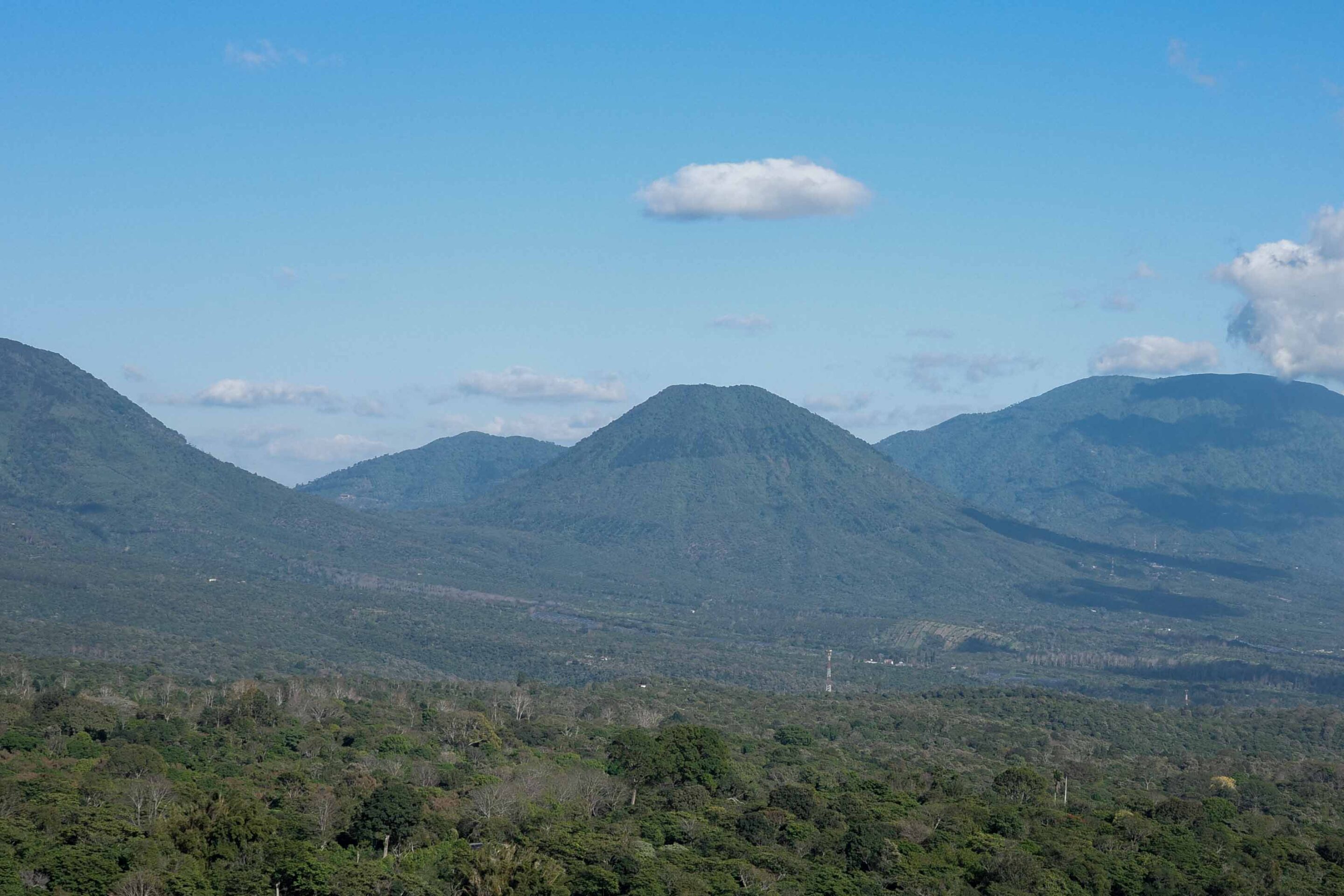
The climb to the top of Volcán Santa Ana was pleasant and quick. Unlike the expedition on Volcán Acatenango and then Volcán Fuego in Guatamala, which I climbed one year earlier and required an overnight stay at the top. This particular volcano is neither the highest nor the most recently erupted one in El Salvador but it is famous for its stunning turquoise crater lake. Just don’t think of going for a swim in it. It’s hot and highly acidic!
As I stood there surveying the scenery, I felt like I was standing on the roof of the country. I could see as far as the Pacific Ocean, Guatemala and the far west of El Salvador. In the days to come, I would learn so much about its moving history, visit different cities and towns and drink countless cups of coffee.
Although I source more than 70 coffees for our monthly coffee subscription every year, I don’t go on regular origin visits. However, to truly understand the many challenges and opportunities faced by specialty coffee farmers and the industry at large, one must also spend time with the people doing the work. My last farm visit was exactly ten years ago. It was high time to refresh my knowledge and get my hands dirty.
But first, I had to get back down.
One cannot speak about El Salvador without mentioning its recent past; a period marked by civil war and prolonged gang violence that turned this small Central American country into one of the most dangerous places on earth. My taxi driver, Kevin, who was waiting for me at the start of the trail told me that, until recently, there were certain areas he didn’t dare enter. “You could only go there if someone would vouch for you. Otherwise, you might get shot,” he explained as we drove through the village of El Porvenir.
When the current president, Nayib Bukele, took power in 2019, no one really knew what to expect of this young but hot-headed former mayor of the capital San Salvador. However, from day one, he set out to reduce the homicide rate of 38 per 100.000 people, which was one of the highest in the world at the time.
After some initial success, properly cracked down following a gang massacre in 2022 when 83 people were murdered in one weekend alone. What followed were mass incarcerations of anyone affiliated with gangs or criminal activity, including anyone with suspicious tattoos. The latest estimate is of around 109,519 prisoners, or 1,6% of the population. That is a LOT of people.
Its CECOT prison has gained worldwide attention and has been visited by many right-wing politicians from a variety of countries who have posed in front of cells holding hundreds of prisoners. Suddenly, everyone hails Bukele as their idol and wants their own CECOT.
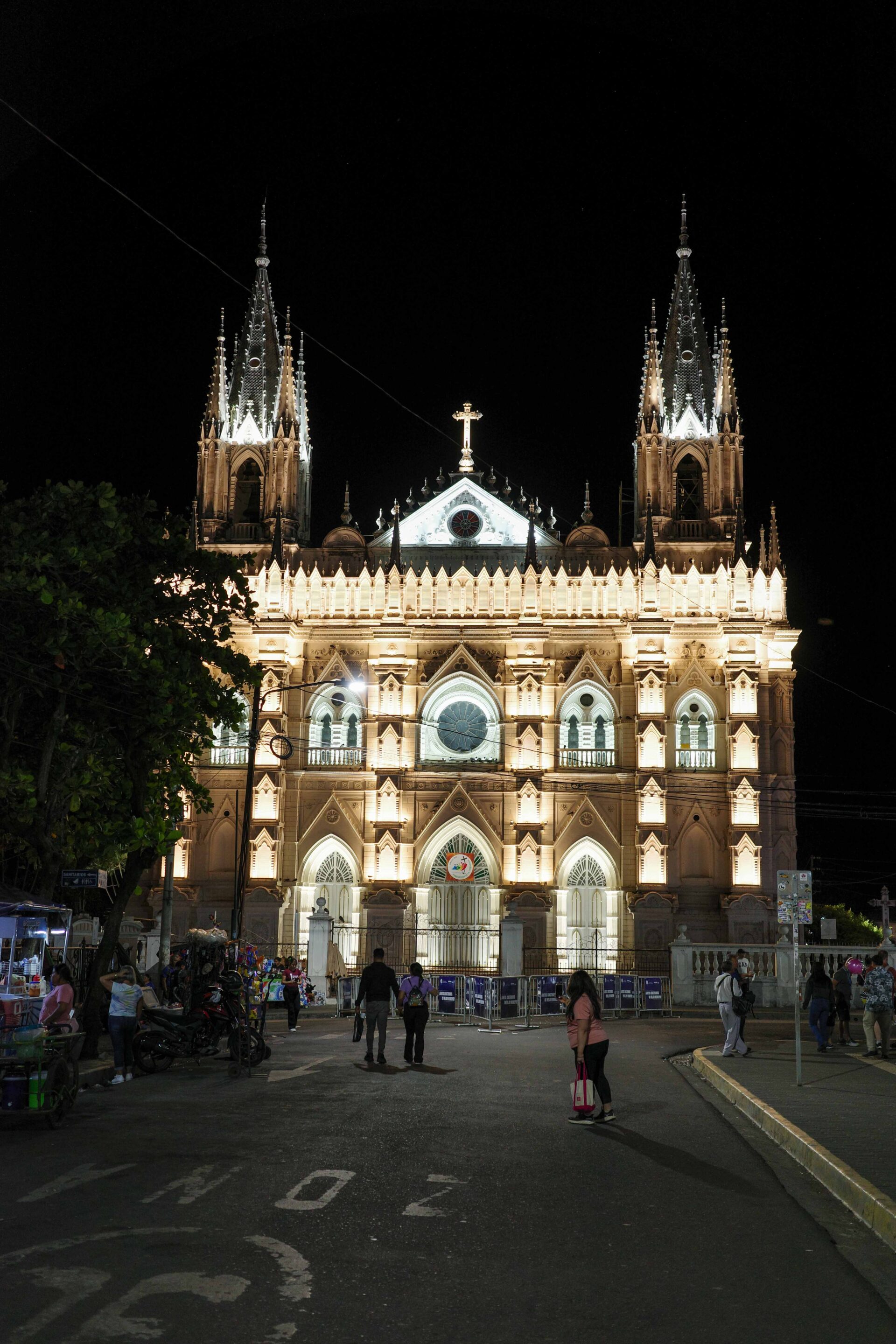
At the same time, another taxi driver who drove me from Suchitoto to San Salvador a few days later, said that the government has completely hollowed out the rule of law and replaced all judges with its cronies. A fear of gangs had been replaced by a fear of being picked up by the country’s security services without arrest warrant or due process.
“If you had a dispute with your neighbour, they could just call the government hotline, claim you were a gang member and you’d disappear,” he lamented. He also shared that his own son was incarcerated for many months under appalling conditions and only got out when a judge finally reviewed his case and ruled that he was innocent. Unsurprisingly, the experience left him traumatised.
Today, El Salvador is dubbed the ‘safest country’ on earth but exactly how this is measured is unclear. However, anyone I spoke to during my trip confirmed that El Salvador is a completely changed place compared to what it was only a few years ago. I felt very safe everywhere I went, even at night.
Unfortunately, safety alone is not a guarantee for success. I often heard that people were missing economic opportunities. One can only hope that growth in tourism will deliver some much-needed income but I also registered complaints that the government is focusing too much attention on flashy Tiktok worthy projects while neglecting the countryside. An abundance of trash, polluted lakes and creaking infrastructure are testament to that.
El Salvador’s path to statehood was a rather complex process. The small territory on the Pacific coast officially declared independence from Spain on September 15th 1821. Yet, what followed were a variety of empires, alliances and short-lived federations with its neighbours before eventually going its own way from 1898 onwards.
Coffee came to El Salvador in the 19th century and the industry saw rapid growth in the years that followed. Despite its small size, El Salvador became the world’s 4th biggest coffee producer by the 1970’s before a terrible crash reduced the fortunes of most of its coffee growers to rubble.
“I don’t know if I’m crazy or just stubborn but to be a coffee farmer in this day and age really is a commitment.” – Rodolfo Rufatti.
The ensuing civil war that lasted from 1979 until 1992, destructive government policies, climate change and the growth of other coffee producing countries further reduced El Salvador’s standing. Leaf rust, a fungal infection that hugely impacts El Salvador’s coffee trees also continues to cause irreparable damage.
Consequently, many coffee plantations lie abandoned. Others were repurposed to grow other crops. This has had massive knock-on effects on other parts of the coffee supply chain too, including coffee mills, many of which have closed down or suffered from underinvestment over the years. As a result, El Salvador produces less coffee today than even places like Madagascar, China or the Central African Republic. But despite the doom and gloom, there is some hope.
The main reason for my visit to El Salvador was to visit my friend Rodolfo Rufatti, one of El Salvador’s most prominent specialty coffee farmers and a long-time partner of The Coffeevine. The last farm I visited was Finca La Esmeralda in Panama, a prime example of a farm that produces world-class coffees in almost perfect conditions. I knew El Salvador was a whole other kettle of fish and I was eager to strap on my hiking boots and see local coffee production with my own eyes.
Rodolfo Rufatti is a 4th generation coffee farmer who traces his ancestry back to textile merchants from Genoa and Torino who were official suppliers to the Italian royal family. It was his great grandfather Rodolfo Rufatti, a descendant from the first wave of Italian immigrants to El Salvador, who got into coffee farming in the 1920’s. Both of my friend Rodolfo’s mother and father’s families were in coffee, albeit with varying degrees of dedication and interest.
Today, Rodolfo owns and manages various coffee farms but produces the bulk of his coffee at Finca El Salvador, which is about 1 hour west from Santa Ana. That is also where he and his farm manager Marcelo picked me up in the morning of the 7th of January.
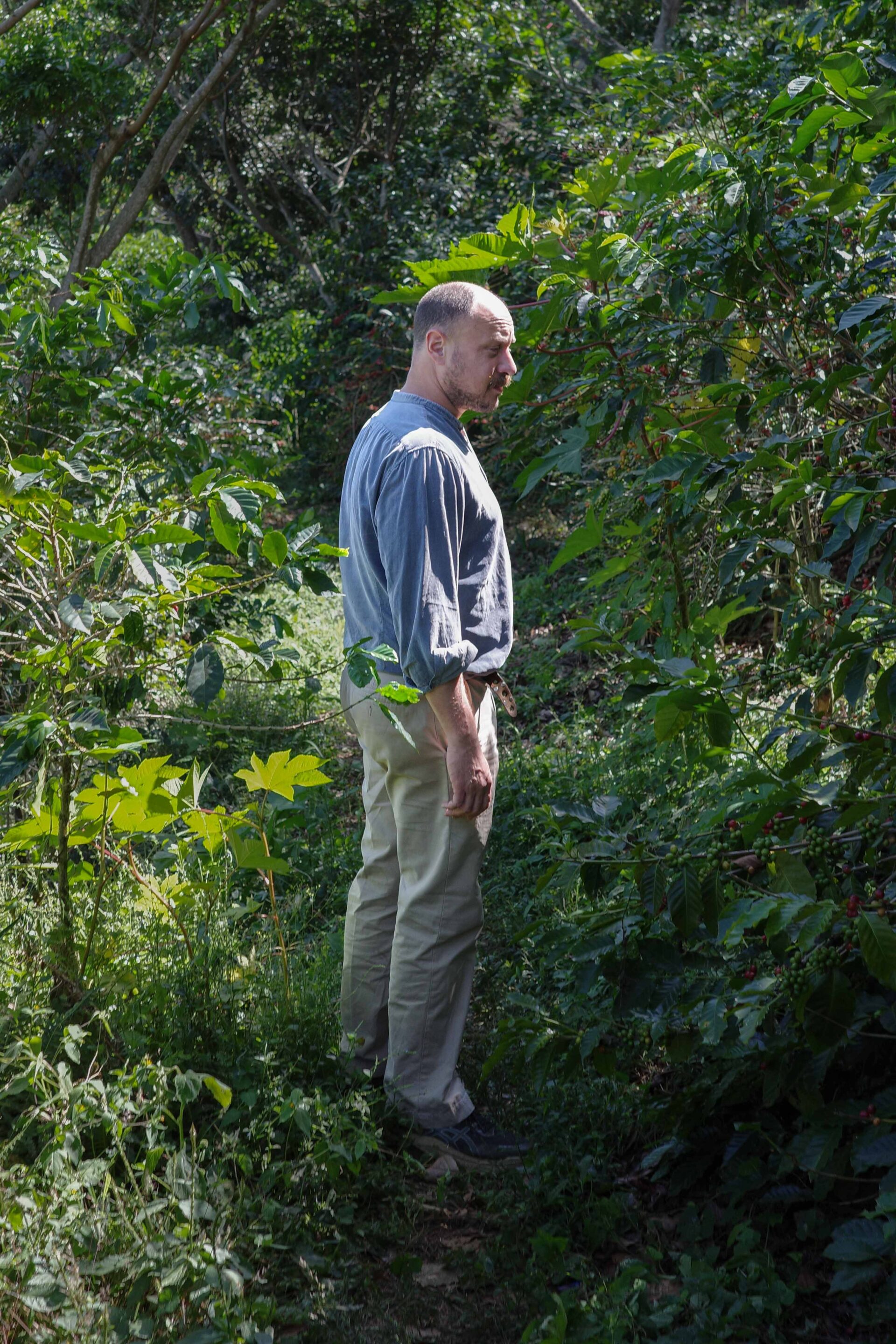
After a quick stop at an award-winning local roastery in Santa Ana, Pirómano Coffee, we drove to Finca Guanacaste, one of the farms that Rodolfo inherited from his father. At around 900 meters above sea level, this farm does not offer the elevation required for many specialty coffee cultivars to flourish and it was in a really bad state when Rodolfo was given the keys to the gate.
Various factors make this particular farm a real challenge. Most of the trees that were planted there are Bourbon. This cultivar, along with Typica, is the mother of many modern cultivars but it is also notoriously susceptible to leaf rust and declining yields. Hypothenemus hampei, an African beetle known as broca is another major problem. The female bores into the cherry and lays around 30-50 eggs. The larvae hatch inside the fruit and continue to procreate before spreading to other tress.
Staffing and theft are other challenges, which are not necessarily unique to El Salvador though. In the case of Guanacaste, many of the farm hands are also subsistence farmers themselves and when the time comes for harvesting coffee cherries, many prefer to harvest their own crops instead. Thus, coffee cherries are left to rot and entire harvests are wasted.

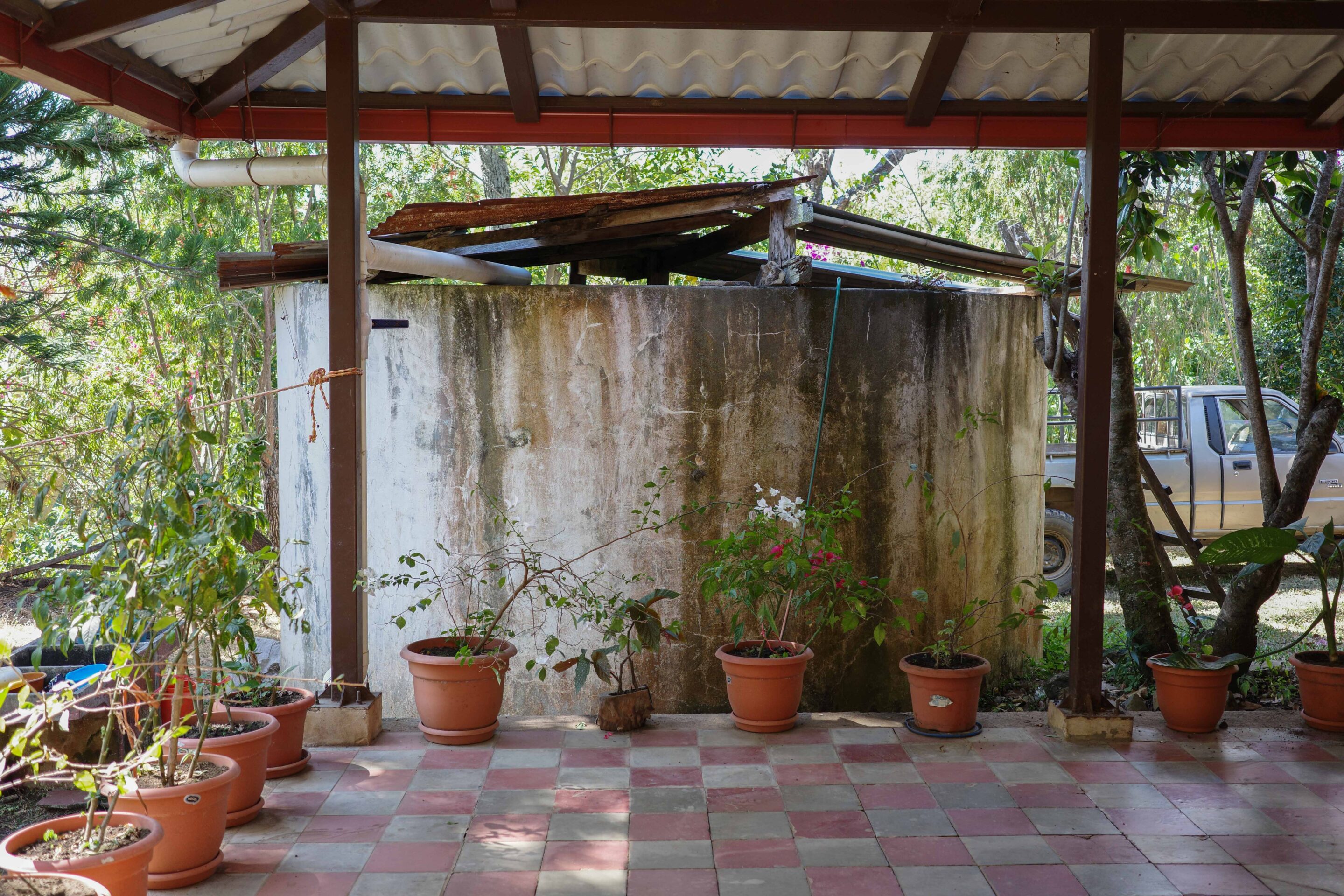
Lastly and most importantly, there’s the climate. El Salvador is in a geographical location that generally does not get a lot of cloud cover and consequently lacks sufficient rainfall to support a large and healthy coffee industry. Due to the heat, many coffee trees are not as productive as they are in other parts of the world and most coffees here are natural processed lots due to the lack of available water.
Rodolfo once said with a sarcastic undertone: “I don’t know if I’m crazy or just stubborn but to be a coffee farmer in this day and age really is a commitment. Maybe even a foolish one.”
It might seem that this farm is a lost cause but the truth is quite different. Guanacaste primarily serves as a research lab where coffee cultivars are tested for resilience, resistance to pests and productivity in difficult environments, and it serves as a showcase for how a neglected piece of land can be regenerated with the right policies and lots of patience.
One thing I found super interesting to learn about was how Rodolfo and his team are trying to regenerate depleted land. Soil health and soil quality are huge factors in coffee farming but sadly, for many years, farms were being poisoned with fungicides and pesticides, which eventually led to severe soil erosion, the death of critical micro organisms and a huge fall in production yields.
In a normal healthy environment, there are so called nematodes that eat bacteria, which contain nutrients. As the nematodes digest these bacteria, the nutrients are excreted and made available to plants, which help them grow and produce fruit. However, there are also so-called ‘bad’ nematodes, which eat other nematodes and attack the root systems of plants, leading to stunted growth and low or negligible yields.
In the past, farmers dealt with this by applying chemicals, which might have offered a short-term solution but essentially fuelled a vicious cycle of destruction because the chemicals did not distinguish between ‘good’ and ‘bad’ nematodes and other organisms that are critical for healthy soil.
Guanacaste was one of those farms where, for many years, the soil was completely depleted of its natural ‘soil wide web’, as Rodolfo called the healthy balance of organisms. Right now, they are trying to find natural ways to rebuild this equilibrium but it will take time.
The big surprise to me was how turmeric, and to a lesser degree ginger, help with this process. As a perennial, turmeric regrows every year and competes with weeds for water, nutrients and light. As a crop, it helps to increase biodiversity and offers a welcome source of additional income since turmeric is in high demand everywhere.
Thanks to turmeric, Rodolfo only has to hire people to manually clear his farms of weeds once a year compared to three times a year before. This has helped to save costs while improving the health of the soil. At the same time, when turmeric is harvested, its root leaves a hole in the soil that can then be filled with water, adding more moisture and water retention.
When we visited the coffee mill where Rodolfo has his cupping lab and a small office, I was even treated to freshly brewed turmeric tea with coffee flower honey. It was absolutely delicious and it’s great for your gut!
At Guanacaste, many of the coffee trees are used for research and learning. Rodolfo pointed out many different cultivars that had been planted there to test how resistant they are to leaf rust, heat, drought and other factors. I saw plenty of older Bourbon and many younger Red Bourbon, Pink Bourbon and Sidra trees as well as other plants that had not yet been genetically identified. Rodolfo shared with me that he works closely with a scientist in Paris who undertakes DNA analyses of the various plants. This has helped to identify a bunch of genetically mutated trees and new cultivars that have appeared due to natural cross pollination.
By investing so much time and money to better understand the natural capabilities of certain cultivars, Rodolfo is learning invaluable information. He can use this not only to help his own farms become more ‘climate proof’ but also help other farmers regenerate their land. To that end, Rodolfo also runs a huge nursery. We visited a small section of it on the way to the coffee mill in Ahuachapán.
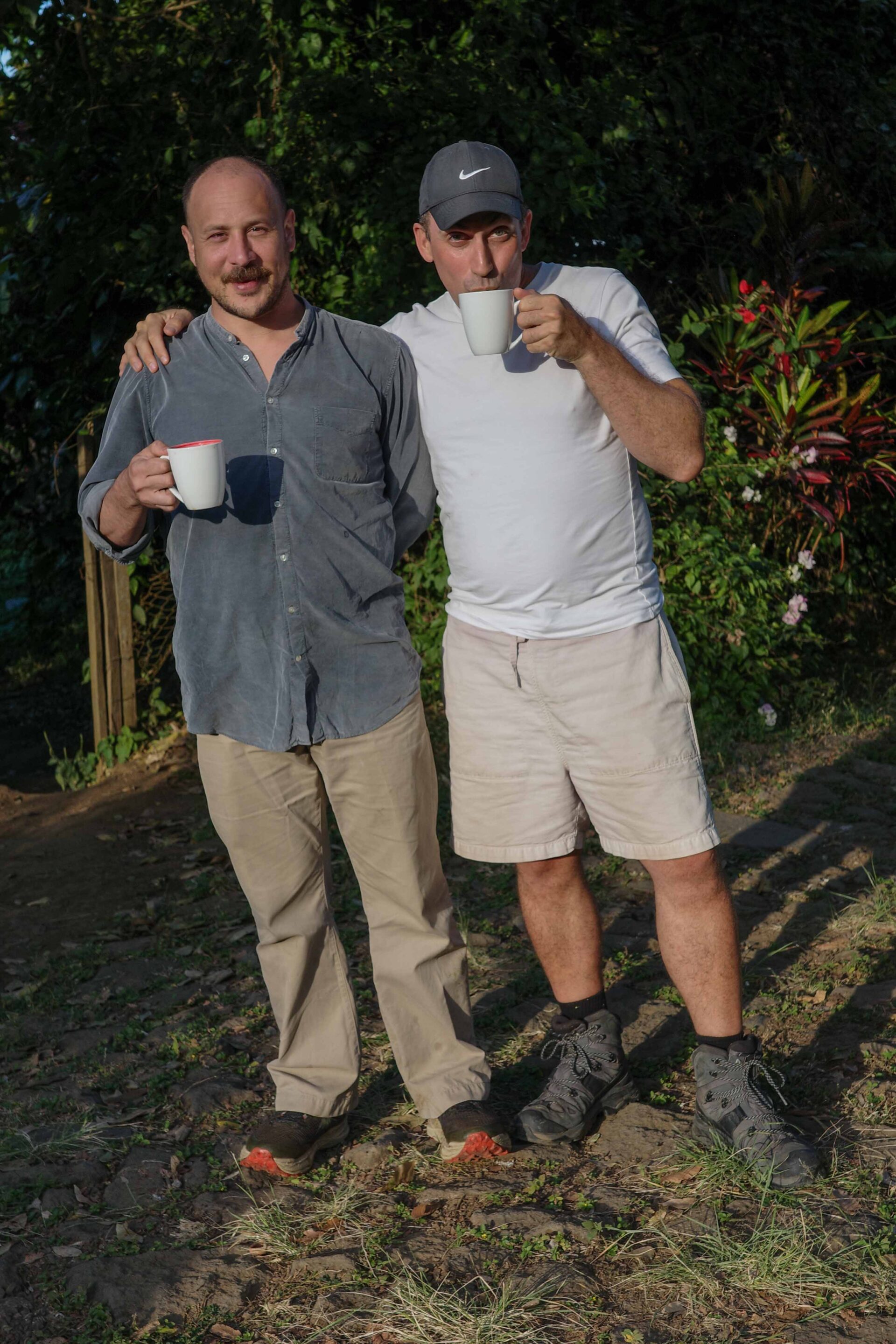
The next morning, Marcelo picked me up at my hotel in Ataco where I had spent the night. Ataco is a small town in the mountains with spectacular views and a laid back lifestyle. Most cafés don’t even open until 10 am. Before getting Rodolfo from his accommodation in Ahuachapán, Marcelo drove with me to a gorgeous café and bakery called Tayúa. With its huge garden, this café felt like a little slice of paradise on earth.
After we collected Rodolfo, we took the arduous road up to his main farm, Finca El Salvador. Completely different from Finca Guanacaste, this farm offered a really stark contrast between a healthy coffee farm and one that is in recovery. However, getting to the farm is not for the faint of heart. The road, if you can even call it that, is more of a dirt track with giant holes and an abundance of rocks.
Finca El Salvador was the first farm Rodolfo’s great grand father acquired in the 1930’s. During the pandemic, Rodolfo’s father passed it down to him since he could no longer take care of it and Rodolfo’s brothers were not interested in getting into coffee farming. At the time, Rodolfo was living in Europe where he had previously set up a coffee importing business with a focus on El Salvadorian coffees.
Over lunch at the Finca, he said it felt had ‘right’ to get into coffee farming and he wanted to continue the family legacy while bringing the farms’ coffee production into the present.
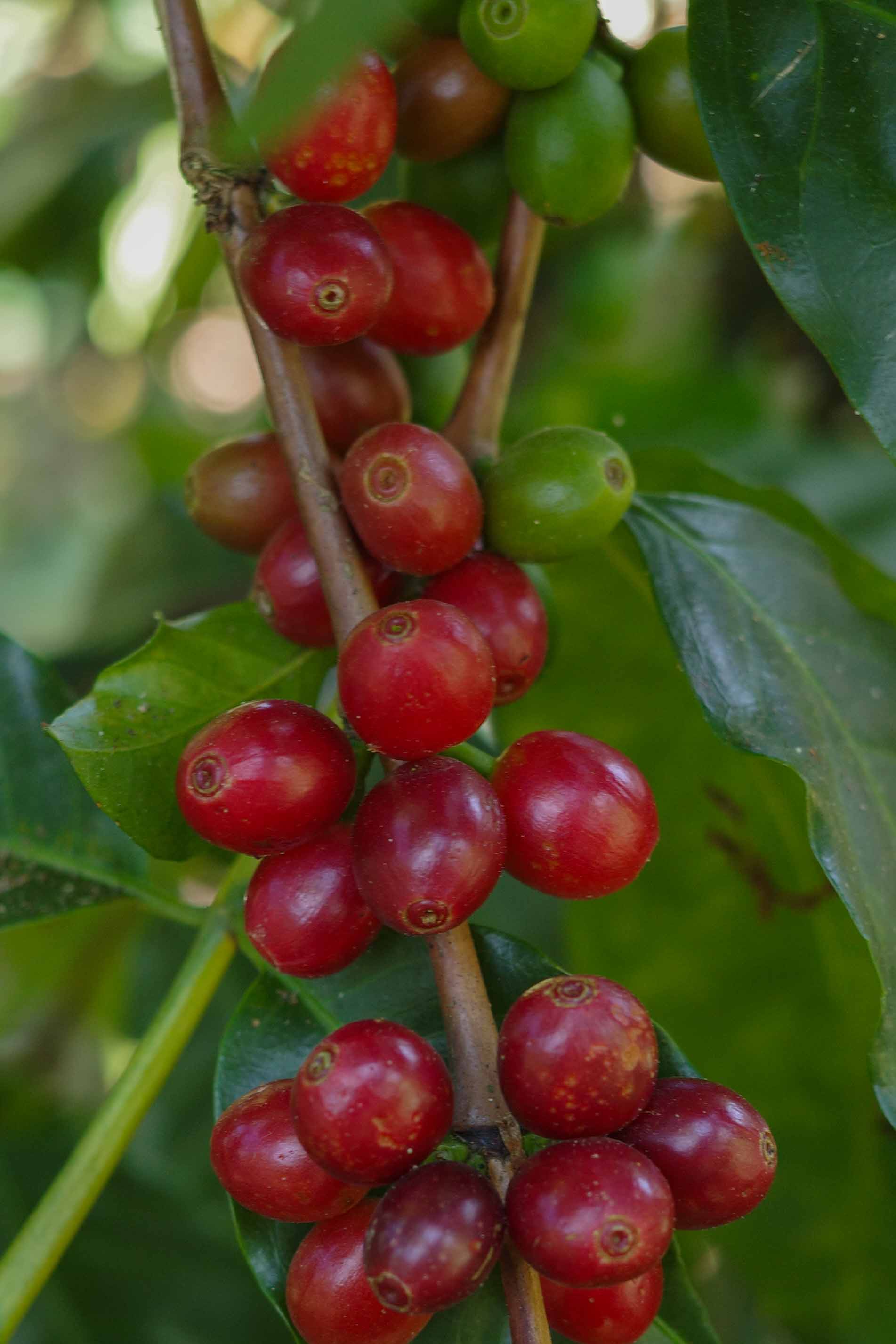
The farm house is located at around 1.640 meters above sea level and the property stretches all the way up the Cerro El Aguila. It produces a variety of coffees from Red Bourbons to Geishas. After inspecting some plots closer to the farm house and tasting countless coffee cherries with varying degrees of sweetness and fruitiness, Rodolfo took me a on a little hike almost to 2.000 meters.
At this level, the silence is deafening and the views are truly magnificent. We just about reached the border where the Geisha parcels begin before going back down. Along the way, he pointed out many different trees, some of which had flourished while others had faltered. At the end of the day, coffee farming really is a never ending game of trial and error, albeit a costly one.
In other coffee producing countries like Colombia, Brazil or Ethiopia, the government is closely involved in the industries. This has allowed those countries to develop a significant edge with regards to their infrastructure, scientific knowledge and global reputations as coffee producers. In El Salvador it is quite the opposite.
Following the demise of its coffee production and its many crises, the government no longer considers coffee an important export and thus offers little to no support. Coffee farmers are largely left to their own devices.
While this might seem daunting, it also offers many opportunities. Rodolfo and other specialty coffee farmers are thus constantly looking for innovative ways to push their businesses forward. From doing extensive research into agronomy to planting more resilient hybrids like the Tabi and Portillo, and exploring ways to sell his coffees directly to consumers, Rodolfo is full of ideas and willing to experiment. One of his most recent ventures is Fake Geisha, a series of unique coffees that are not Geishas but still very complex and unique. They will be roasted in Europe and distributed directly to consumers.
What certainly also helps is the employment of innovative processing techniques, which can add a more exotic flavour injection to a sweet but otherwise unspectacular Red Bourbon. We have, in the past, featured an Anaerobic natural processed lot from Finca El Salvador in our coffee subscription, which got rave reviews from our customers.
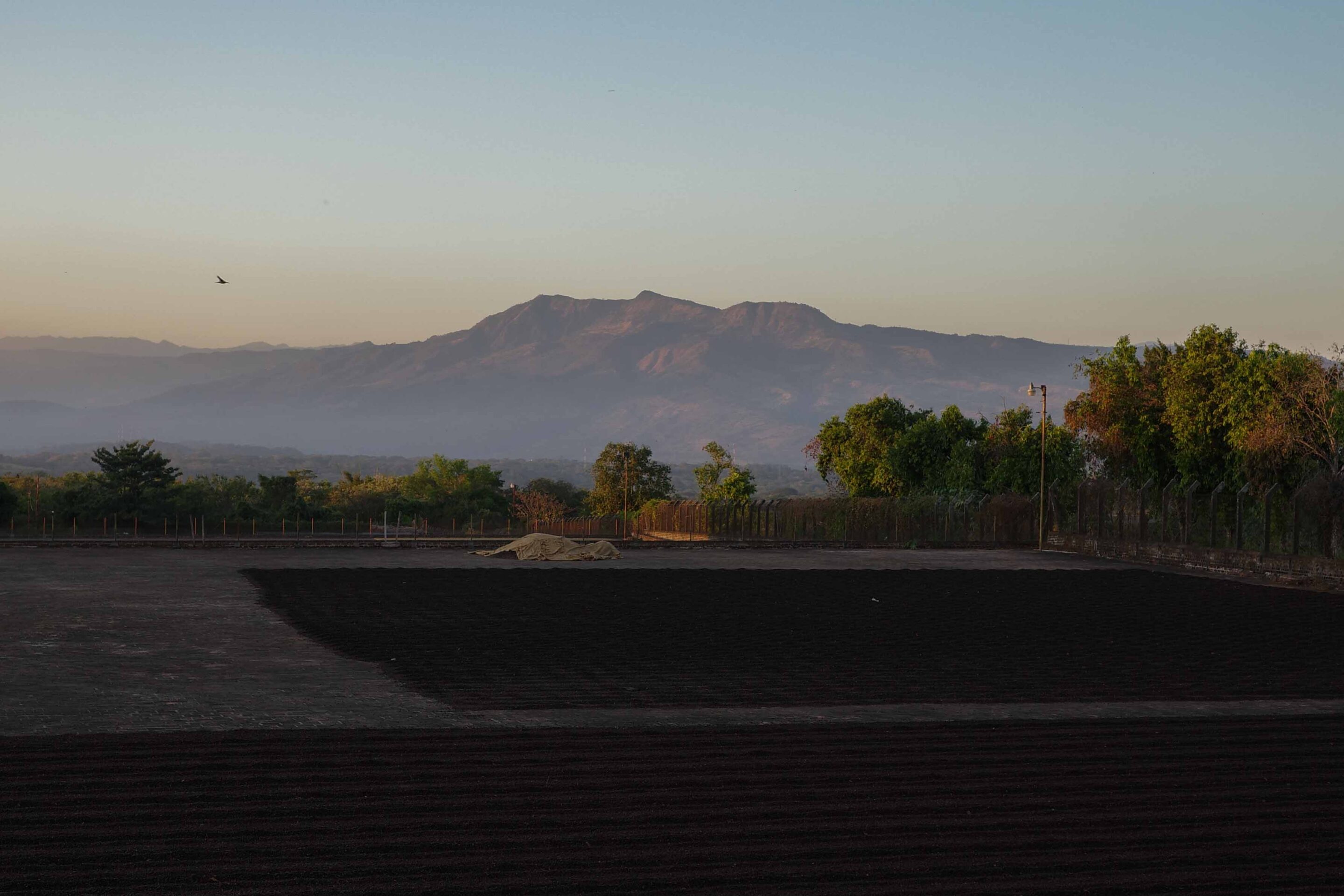
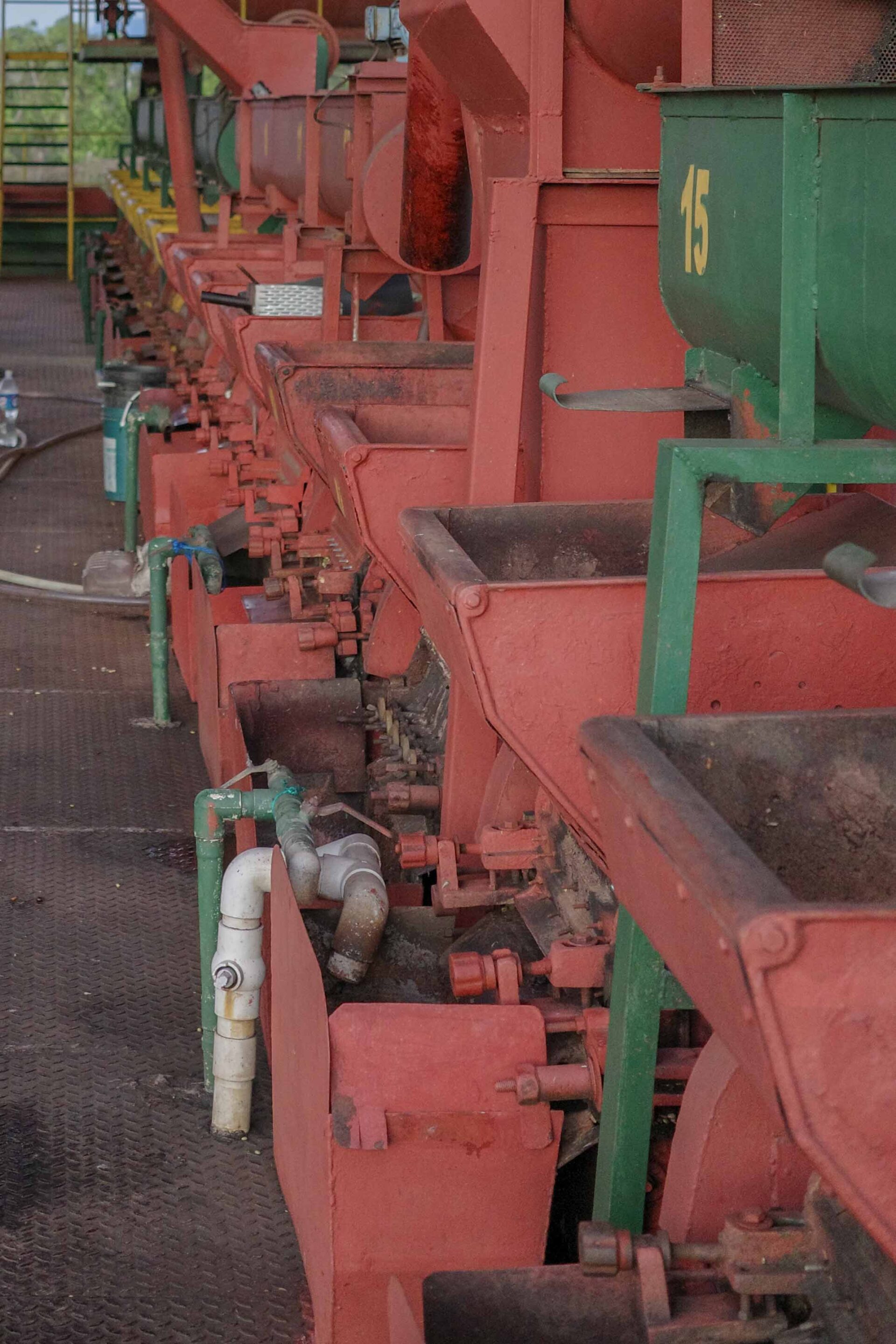
Before finishing the day with a lovely dinner in Santa Ana, we headed to the mill one more time where I got a tour of the entire facilities. As the sun set and painted the sky in beautiful shades of orange, pink and purple, I saw firsthand how the decline in coffee production has affected other parts of the chain.
The mill currently only operates at around 20% of its former capacity with much of the machinery used for sorting, depulping, fermenting, hulling and drying standing idle.
To round off this incredible experience, I was invited to take part in a cupping organised by Rodolfo’s Quality Control Manager. This was the perfect opportunity to get a taste of various coffees grown at both Guanacaste and Finca El Salvador and to my surprise, one of my favourites came from the former. Maybe this was a sign that with careful management, lots of grit and a deeper understanding of the real issues at hand, run down coffee farms in El Salvador can truly be brought back to life and that despite the many challenges, there is a future for specialty coffee in this country.
I’d like to think so anyway.
Discover a World Class selection of incredible coffees from our fabulous April roasters. Brew like a champion with this brew guide.
Are we reaching peak cringe? Are Coffee Raves a hit or a fad? Here’s an honest account of attending one such event recently.
Get the most flavour out of the delicious coffees from our March 2026 edition with this handy brew guide from our roasters.
In April, we’re offering you 8 really exceptional coffees from 7 talented global roasters, including two former World Barista Champions.
Subscribe to our newsletter for new box announcements, articles and special offers. No spam. Promise!
© 2026 All rights reserved The Coffeevine.


I’ve visited various central American countries looking for learning more about coffee and I’ve found a similar struggle. The government instability, lack of financial support to compete with other coffee-producing countries, climate change related challenges. And still, farmers demonstrate unparallel grit and resilience. As a coffee lover, I feel responsible to do what I can to support, for instance buying coffee from roasters that pay fairly the farmers through transparent and conscious importers
Absolutely! Thanks for sharing and for doing your part!