
Get a taste of our delicious June 2026 edition
We’re thrilled to bring you a wildly ambitious Coffeevine edition in June 2026 filled with exciting coffees from 7 different roasters
For too long, decaf was the kind of coffee that you were embarrassed to order and that cafés kept under the counter. You either had to be pregnant, have high blood pressure or happy sipping on flat, uninspiring coffee.
How times have changed! Since we started offering decaf/low-caf coffees in 2024, we’ve been able to explore some truly extraordinary coffees that were really unexpected. Some coffees, in particular, had us convinced that they were regular caffeinated coffees. That’s how delicious they tasted.
To shed a bit more light on this fast-growing segment and explain a bit better how each decaffeination process works, we put them together in this handy overview. Feel free to come back whenever you need.
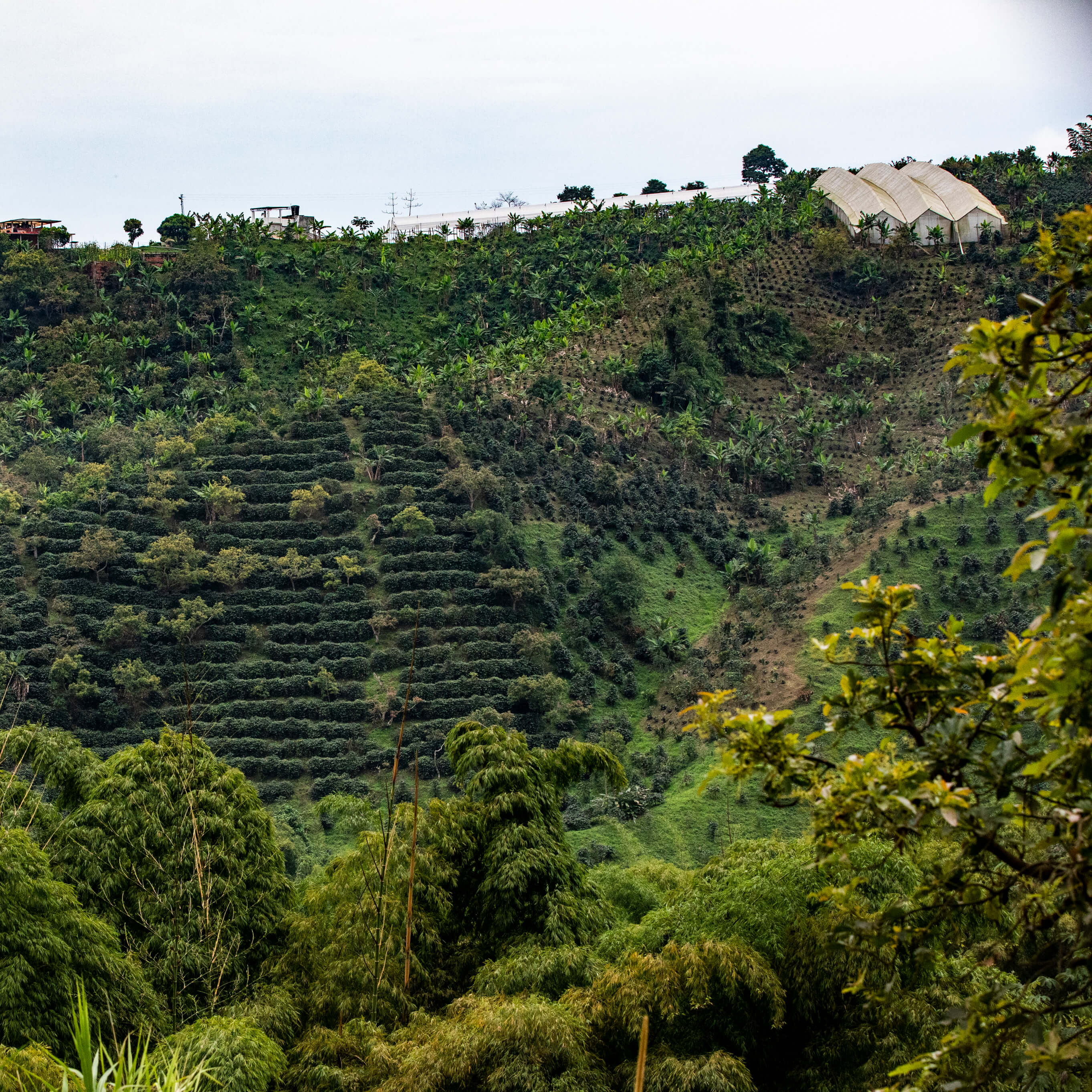
Decaffeination happens on green (unroasted) coffee and relies on one core idea: caffeine is highly soluble and can be selectively removed using water, solvents, or CO₂ while trying to keep the flavour compounds in the bean.
In the EU, “decaf” generally means very low residual caffeine (commonly cited as max 0.1% in roasted coffee and 0.3% in green coffee by weight).
What it is (science, simplified):
Beans are soaked so soluble compounds move into water. That water is passed through activated carbon filters that trap caffeine. The now “flavour-saturated” water (often described as green coffee extract) is reused to remove caffeine from new beans while limiting flavour loss.
Cup profile preservation:
Usually clean and balanced, often the best “classic decaf” option when the starting coffee is good. Can lose some high aromatics compared to caffeinated lots.
Pros:
No solvent label concerns (water-based).
Often perceived as “premium” in specialty.
Cons:
Can reduce intensity/aromatics versus the original lot (especially florals).
Not every coffee “survives” this process equally well.
Cost impact: High
Typically priced higher due to processing complexity, slower throughput, and extra logistics (shipping green coffee to a dedicated facility), often done in Canada and other places, meaning extra shipping.
What it is (science, simplified):
Very similar principle to Swiss Water: use caffeine-free, flavour-saturated water and filtration to pull caffeine while preserving soluble flavour compounds. Often associated with the Descamex facility and “MW D’caff®.”
Cup profile preservation:
Often sweet, smooth and approachable. Sometimes a touch softer in acidity than the original.
Pros:
Water-based, specialty-friendly positioning.
Great for comforting profiles (chocolate, caramel, nuts).
Cons:
Same general challenge as Swiss Water: some coffees flatten a bit.
Availability depends on facility relationships and origins.
Cost impact: High
Comparable to Swiss Water in many specialty contexts.
What it is (science, simplified):
Beans are steamed to open pores, then washed in a solution containing ethyl acetate (EA), a compound naturally occurring in fruits and often sourced as a byproduct of fermented sugarcane. EA binds preferentially to caffeine and beans are then rinsed/steamed again to remove traces.
Cup profile preservation:
Often the most “caffeinated-like” in body and sweetness for many drinkers. Can read as slightly fruitier / rounder, and some lots show a gentle “candy” sweetness.
Pros:
Excellent flavour retention and sweetness in many coffees.
Frequently used for Colombia decafs; common in specialty supply chains.
Cons:
Some consumers misunderstand “solvent” (even though used food-grade and removed).
On some coffees, you may perceive a subtle added sweetness or softened acidity.
Cost impact: Medium–High
Often a bit less expensive than Swiss Water/CO₂, while still “specialty priced.”
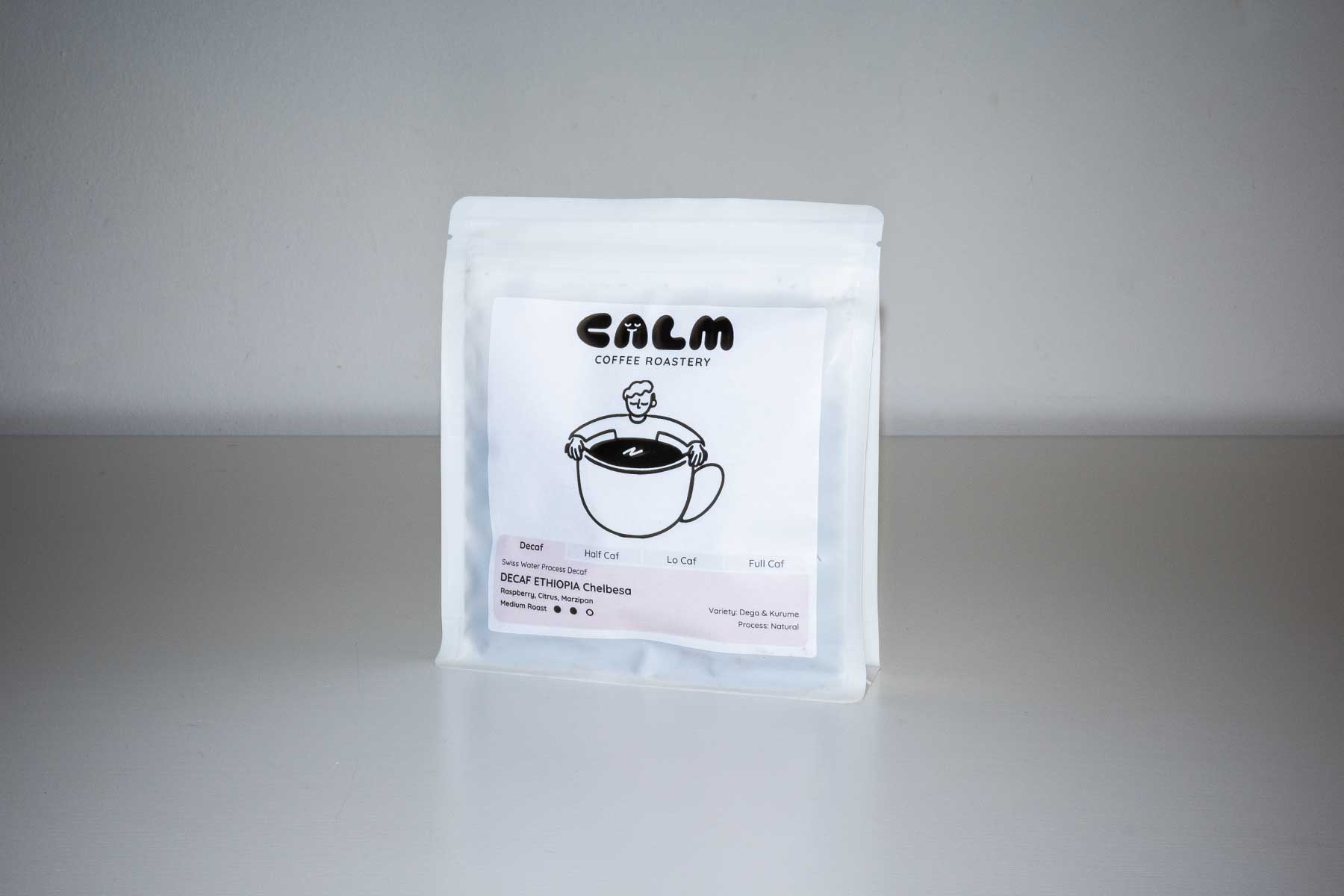
What it is (science, simplified):
Beans are moistened/steamed, then placed in a high-pressure vessel with supercritical CO₂. Under pressure, CO₂ behaves like a solvent that selectively dissolves caffeine. The CO₂ is then separated and reused; caffeine is recovered from the system.
Cup profile preservation:
Often excellent, especially for maintaining structure and clarity because CO₂ is relatively selective to caffeine.
Pros:
Strong flavour retention potential.
CO₂ is reusable; very “science-forward” and scalable.
Cons:
Requires expensive equipment and expertise.
Not as widely available in specialty micro-lots.
Cost impact: Very High
One of the most expensive options due to capital-intensive infrastructure.
What it is (science, simplified):
Green coffee is steamed, then repeatedly rinsed with methylene chloride, which bonds with caffeine. Beans are then steamed again to remove residues.
Cup profile preservation:
Often surprisingly good at retaining body and classic “coffee” taste because the process can be efficient and relatively selective. (This is why it remains common.)
Pros:
Efficient and consistent; often keeps body.
Typically the most affordable decaf method at scale.
Cons:
Consumer perception can be negative due to “chemical solvent” concerns, even when regulated limits are low.
Cost impact: Low–Medium
Usually cheaper than water-process or CO₂ options.
Decaf is essentially “coffee… plus an extra industrial step.” You’re paying for:
More handling & time (steaming, soaking, repeated cycles, drying)
Yield + quality risk (some coffees lose aromatics; fewer lots make the cut)
That’s similar to non-alcoholic beer/wine: you’re buying the full product and then paying for the technology to remove one key compound (alcohol / caffeine) while trying to keep flavour.
If your goal is “less caffeine” rather than “near-zero caffeine,” these can be great:
A Bourbon mutation known for naturally lower caffeine (often cited around ~0.3–0.6% or sometimes higher depending on source and context) versus typical Arabica around ~1.2–1.6%+.
Cup vibe: delicate, sweet, often tea-like.
Trade-off: rare, can be harder to grow and more expensive.
A hybrid involving Coffea racemosa (a naturally low-caffeine species), often cited around ~0.7–0.9% caffeine.
Cup vibe: floral/fruity, can be surprisingly expressive.
Trade-off: niche availability; not “decaf-level” low.
Decaf is a small but rising slice of the coffee market. In the U.S., NCA-tracked past-day decaf consumption climbed from 9% in 2024 to 12% in 2025 (+33% relative). In Europe, demand is also rising: EU imports of green decaffeinated coffee jumped 36.9% in 2023 and were nearly double 2016 levels.”
Specialty decaf is growing because quality has improved—and consumers want great coffee without the ‘sleep tax’. Trade coverage points to stronger demand for better decaf lots, especially EA/sugarcane and water-processed coffees.”
Luckily, with growing demand comes growing supply and vastly improved lots that really offer a completely new perspective. This trend will only get stronger in the coming years as people become more health conscious and discover suitable alternatives that still meet their high standards.
We offer a delicious decaf/low-caf coffee every month. We work with three rotating decaf specialists including Les Révélations, D stands for Decaf and Calm Coffee Roasters.
You can find out monthly Decaf selection in our shop ➡️
Which of these decaffeination methods is your favourite? Do you like drinking decaf?
We’re thrilled to bring you a wildly ambitious Coffeevine edition in June 2026 filled with exciting coffees from 7 different roasters
Make the most of every bean with this custom brew guide from our May 2026 roasters. Learn about set up, water, grinding and brewing.
For this upcoming Coffeevine edition in May 2026, we’re going to team up with six super talented roasters from around the world.
To mark the exquisite April 2026 edition featuring two former World Barista Champions, we interviewed Jooyeon Jeon and Raúl Rodas just for you
Subscribe to our newsletter for new box announcements, articles and special offers. No spam. Promise!
© 2026 All rights reserved The Coffeevine.


I’ve tried very great decaf in the last year, in particular the ones from d stands for decaf stood out. I actually bought the set of 4 different decaf method part of the James Hoffman project and it was the first time that I got into delicious decaf. I can’t wait to see where the industry will go so that I can enjoy a cup of coffee any time during the day.
PS. I even once tried a decaf coffee infused with CBD. I fell asleep like a baby 🤭