April 2026 Brew Guide – Epic recipes for epic coffees
Discover a World Class selection of incredible coffees from our fabulous April roasters. Brew like a champion with this brew guide.
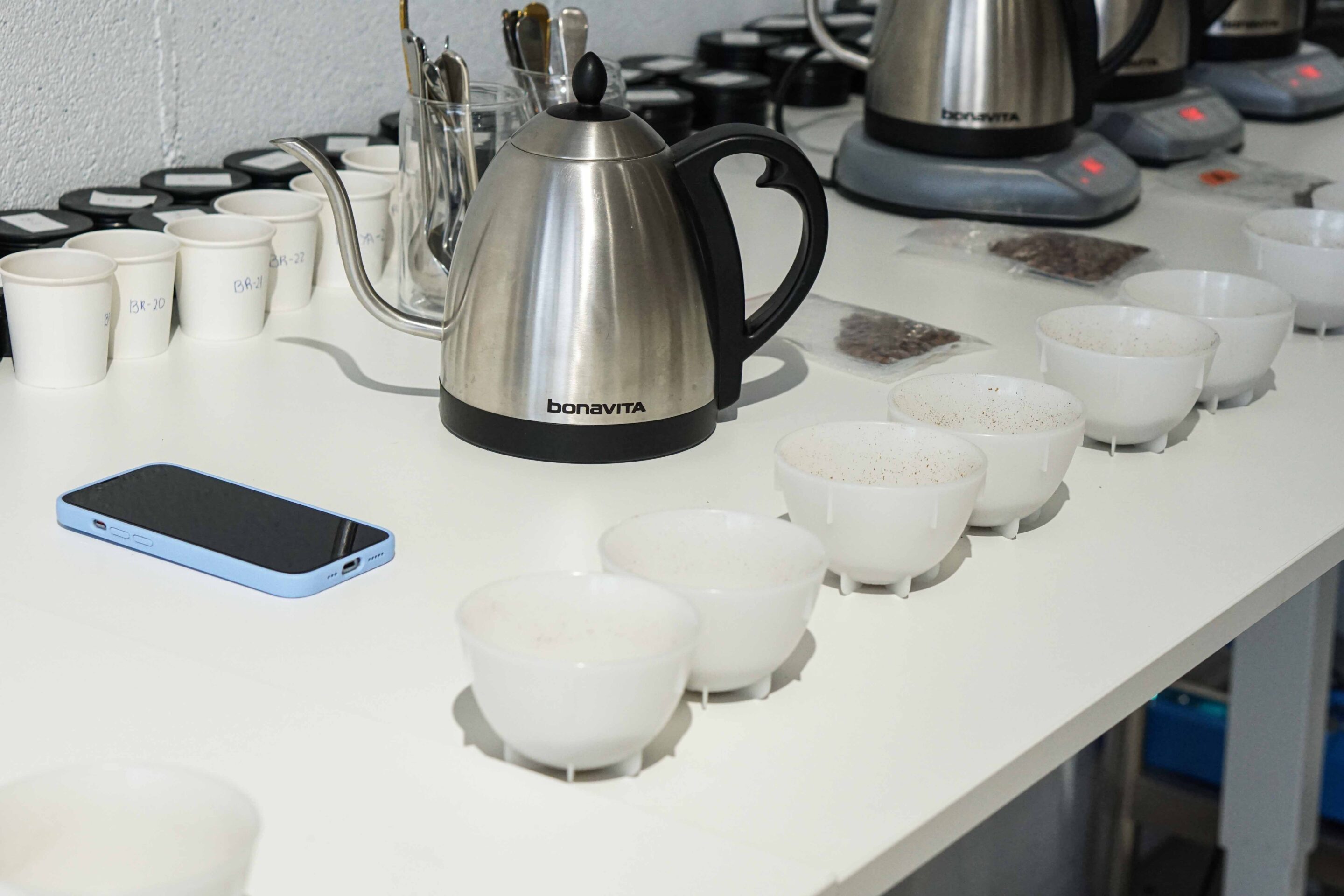
If you’ve ever wondered how specialty coffee professionals decide which coffees are worth roasting, buying, exporting, or featuring in a subscription like ours, the answer is simple:
We see them, we smell them and we taste them.
But not casually. Not over breakfast. We cup them.
Cupping is the global language of coffee quality. It’s how farmers evaluate harvests, how importers approve samples, how roasters control quality and how we select the coffees that end up in your Coffeevine box each month.
Let’s take you inside the ritual.
Coffee cupping dates back to the late 19th and early 20th century when traders needed a standardized way to assess coffee quality before buying large shipments. With beans moving across continents, there had to be a system that removed storytelling and focused purely on what was in the cup.
Over time, cupping became formalized. Today, most professionals use standards developed by the Specialty Coffee Association (SCA), including the now widely used 100-point scoring system.
In short: cupping is coffee’s version of blind wine tasting. The idea is simple. By employing a global standard, we can all assess coffees the same way. This removes uncertainty and helps determine the price of a certain coffee based on a set of parameters.
Of course, there are also problems with cupping scores but we’ll get to that later.
Every month, when we invite roasters to participate in a Coffeevine selection, we ask them to send two coffees each.
During the cupping, these coffees are presented ‘blind’. That’s to say that we code the lots and only reveal the names of the roasters and their coffees after we’ve completed the session. Why?
Because branding is powerful. Reputation influences perception. We want none of that. We want clarity. A clean sensory experience. No preconceived notions.
When we cup in Amsterdam, Barcelona, or wherever we are gathering that month, the samples are simply numbers on bowls. Nothing more. That way, when we ask everyone to name their favourite coffees, they don’t do this based on which roaster or farmer is the most famous. They do it based on which coffees they loved the most.
It’s the fairest way to judge coffee.
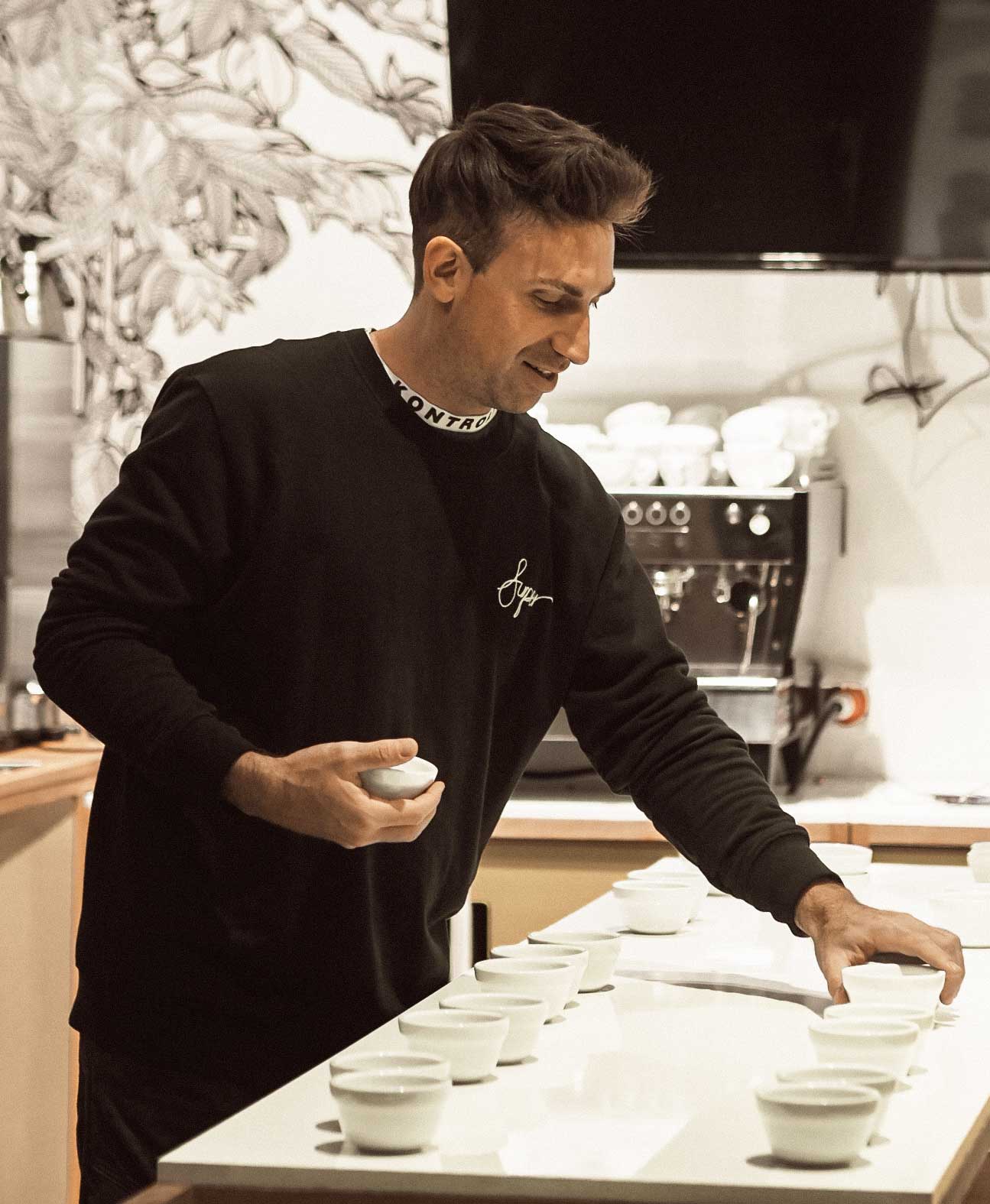
Our setup is simple and consistent.
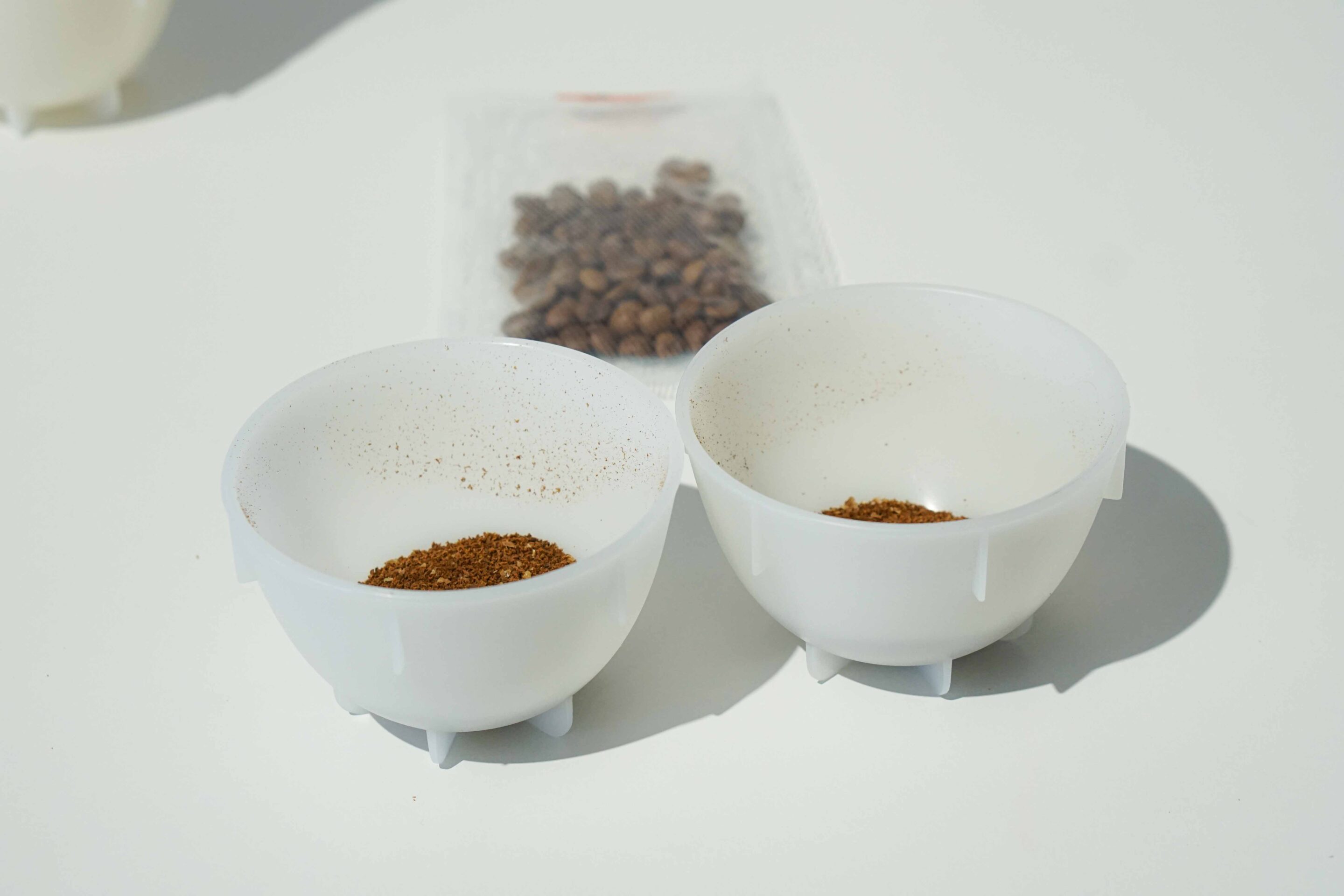
We use Barista Hustle standard bowls
10 grams of coffee per bowl
Two bowls per coffee (to detect defects or inconsistencies)
Same grind size
Same water
Same protocol
Here’s the flow:
Before water even touches the coffee, we inspect the beans and then, after grinding them, we smell the grounds. This can often already give a useful first impression of a coffee. What colour do the beans have? Are there visible defects? Inconsistencies in the roast colouration? Does the coffee smell good or bad?
Hot water is poured directly onto the grounds. The coffee forms a crust on top and is steeped for 4 minutes. During this time, we always pass over the coffee one more time to smell the aroma again. It always changes after coming into contact with water.
This is the dramatic moment.
We lean in, bring our noses close to the cup, and gently break the crust with a spoon. Aromas burst upward. This is often the most intense aromatic moment of the entire cupping. The spoon is passed through the cup three times from front to back, ideally without touching the grounds that have sunk to the bottom of the cup.
Then we skim and clean the surface.
Coffees cool slightly. Temperature matters. Many flavor nuances become clearer as the coffee cools. During this time, we often engage in conversation about coffee and people can ask questions. What’s important is that everyone understands the protocol. We ask everyone to avoid sharing their findings during the cupping process and to keep notes and thoughts private until the end.
Why?
It’s super easy to influence others, especially when participants are less experienced. This can often negatively impact objective assessment.
Yes. Loudly.
Slurping isn’t theatrics, it’s technique. By aspirating the coffee across the palate, you aerate it and distribute it across as many taste receptors as possible.
It’s exactly the same principle as wine tasting.
Some professionals spit. Some swallow. It depends on the number of coffees on the table (and caffeine tolerance). When we do cuppings in the evenings, we often spit, unless we have a table full of decaf coffees. Then it would be sacrilege!
Slurping can make people feel self conscious but it is really part of the process and the more you lean into it, the better you will be able to evaluate a coffee. So, there’s no shame! Just let it rip!
We hear this often. And it’s true that at first it might just feel like you’re tasting a lot of the same. The differences between coffees can be subtle. But subtle does not mean insignificant. It’s often that tiny subtle difference that is makes all the difference if you catch our drift.
For instance, when there’s a defect present in a coffee, a small difference between cups can be an indicator that there’s something wrong with a particular lot. We have, in the past, identified coffees with potato defect (common in Rwanda) simply because one cup tasted very different from the other.
With practice, you can begin to detect things like:
A sharper acidity
A silkier mouthfeel
A faint herbal note or more pronounced floral note
A lingering sweetness
A slight defect in one bowl but not the other
It’s a sensory muscle. And like any muscle, it strengthens with repetition.
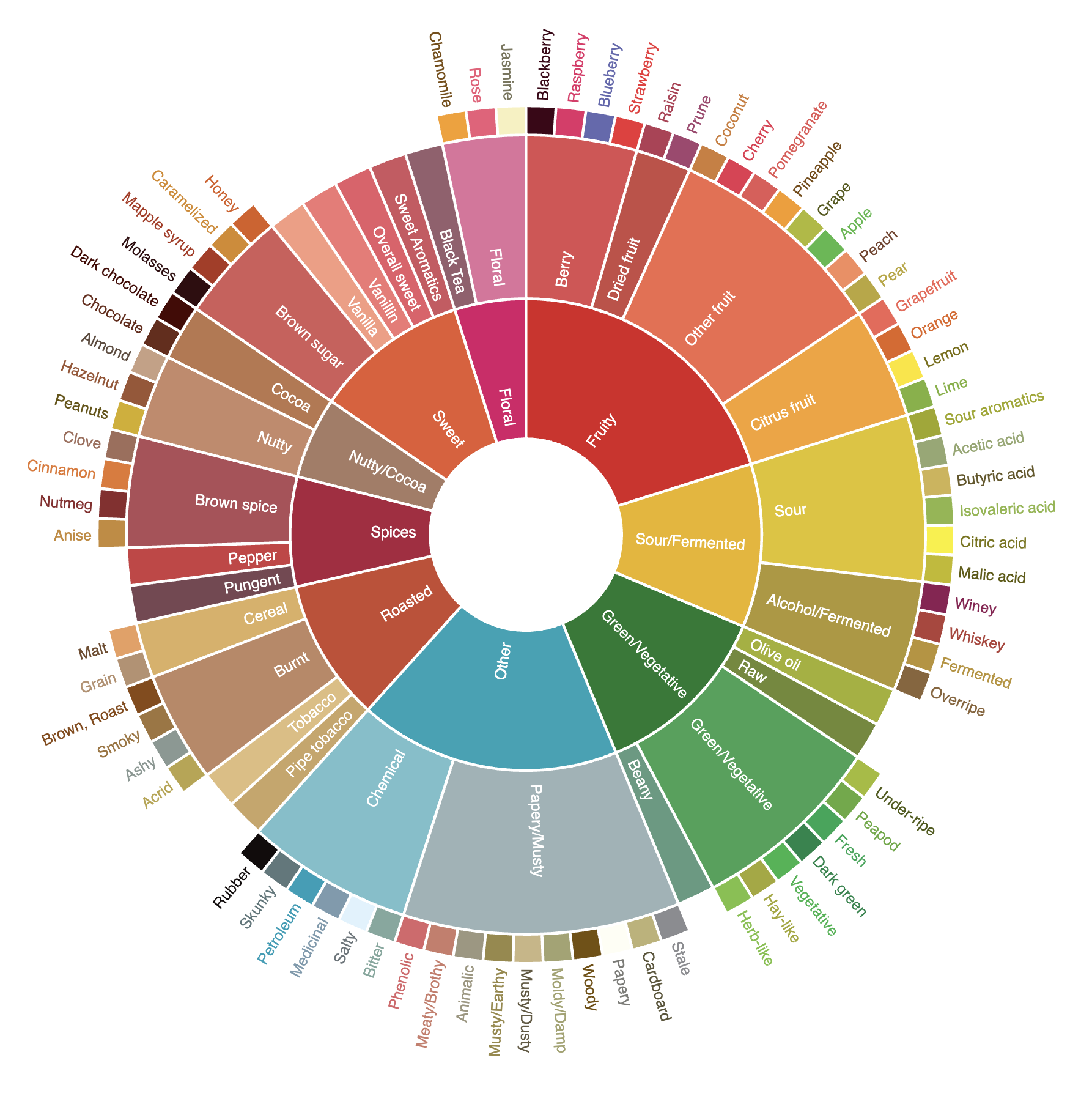
Indeed, it is during this cupping process that producers, importers and roasters pick the corresponding flavour notes. This is also really the trickiest part, in our opinion. The reason is that aromatic and flavour compounds are extremely volatile and much also depends on the water composition, temperature and other factors.
However, the Coffee Taster Flavour Wheel is a very useful tool to have at hand as it also provides visual guidance to those who see flavours in colours. Yep, that is a real thing!
Does your coffee not taste like lavender, caramel candy or forest fruit? No worries. These are extremely subjective options that are sometimes very strongly identifiable and sometimes very fleeting.
The most important thing is to have fun.
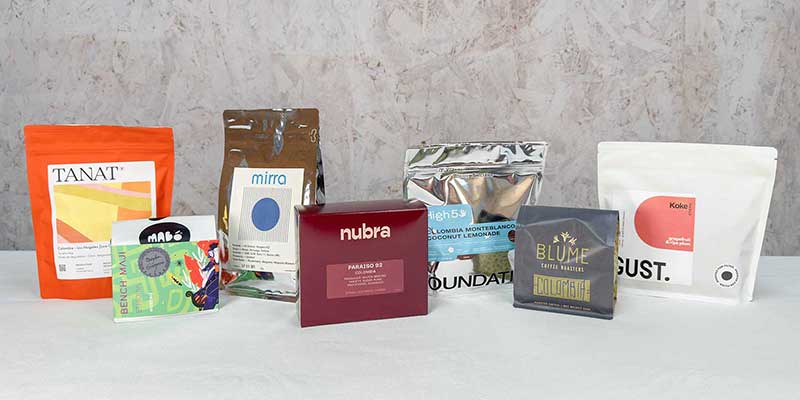
Want to get access to the best roasters? Join our critically-acclaimed coffee subscription and get a fresh selection sent to your door every month.
Most specialty cuppings use the SCA scoring framework, which rates coffees on a 100-point scale.
Coffees above 80 are considered specialty. Most of the coffees we work with score around 85+ points.
But the final score isn’t magic — it’s built from individual attributes:
Aroma
Flavor
Aftertaste
Acidity
Body (mouthfeel)
Balance
Uniformity
Clean cup
Sweetness
Overall impression
Each is evaluated separately, then combined into a final score. But here’s the truth:
The number matters less than the experience. A coffee might score 86 and feel electric and exciting. Another might score 87 and taste technically perfect but feel emotionally flat.
Cupping is structured, but it’s still human. And, as alluded to before, there are also problems with this. A certain coffee that would normally score 82 points can be ‘supercharged’ with funky processing or co-fermenting that then gives it a score of 85 points or more. The coffee itself is still the same so are we giving the producer three extra points for simply being creative in the kitchen?
For many producers this is a boon because an otherwise boring coffee can suddenly fetch a much higher price so, technically, we’re not against this at all. However the issue with very outspoken fermentations and such is that they often completely obscure the terroir.
Then there’s the problem of ‘pointwashing’ whereby an importer or roaster artificially inflates a coffee’s score to justify a higher price. Sometimes, inflation happens because scores are based on pre-shipment samples that are not re-evaluated after shipping or storage, even though the coffee has faded and lost quality.
So, the point is that scores are not to be taken as the law of the land but as a guide. Perception is extremely personal after all.
When we cup for The Coffeevine, we’re asking:
Does this coffee excite us?
Does it represent the roaster well?
Does it offer something distinct?
Does it deserve to be in your monthly box?
We’re not looking for perfection. We’re looking for character, clarity, and integrity. We also want our selection to work well in harmony. That means picking a set of coffees that are not the same.
In other words, we don’t want three washed Ethiopian lots in one edition. We want something that is diverse, fun, exciting and representative of the coffee industry as a whole. And yes, that also means that sometimes we pick a co-fermented coffee.
The last time we did this, it really split opinions but most customers said they ‘LOVED IT’.
In an age of marketing, storytelling, and hype, cupping is grounding. It strips coffee back to its essence.
It’s an essential process that is employed by countless people across the entire coffee supply chain. From producers to importers to roasters to coffee subscriptions and end consumers. So many hands touch a coffee before it is consumed that cuppings are really crucial checks to make sure the quality promised is truly the quality delivered.
We try to host open cuppings on a regular basis to invite people to participate in our events. As a company that does not have a storefront, this is really an essential part of our engagement with the community.
If you every want to join us at one of our cuppings, be sure to keep an eye on our socials and newsletter.
Interested in taking your coffee journey to the next level? Be sure to subscribe to our coffee subscription!
You can find our full range of boxes in our shop ➡️
Now it’s over to you:
What do you think of coffee cupping? Is this something you’ve done before? What do you love the most about it? Leave us a comment below.
Discover a World Class selection of incredible coffees from our fabulous April roasters. Brew like a champion with this brew guide.
Are we reaching peak cringe? Are Coffee Raves a hit or a fad? Here’s an honest account of attending one such event recently.
Get the most flavour out of the delicious coffees from our March 2026 edition with this handy brew guide from our roasters.
In April, we’re offering you 8 really exceptional coffees from 7 talented global roasters, including two former World Barista Champions.
Subscribe to our newsletter for new box announcements, articles and special offers. No spam. Promise!
© 2026 All rights reserved The Coffeevine.