Discover our incredible May 2026 edition
For this upcoming Coffeevine edition in May 2026, we’re going to team up with six super talented roasters from around the world.
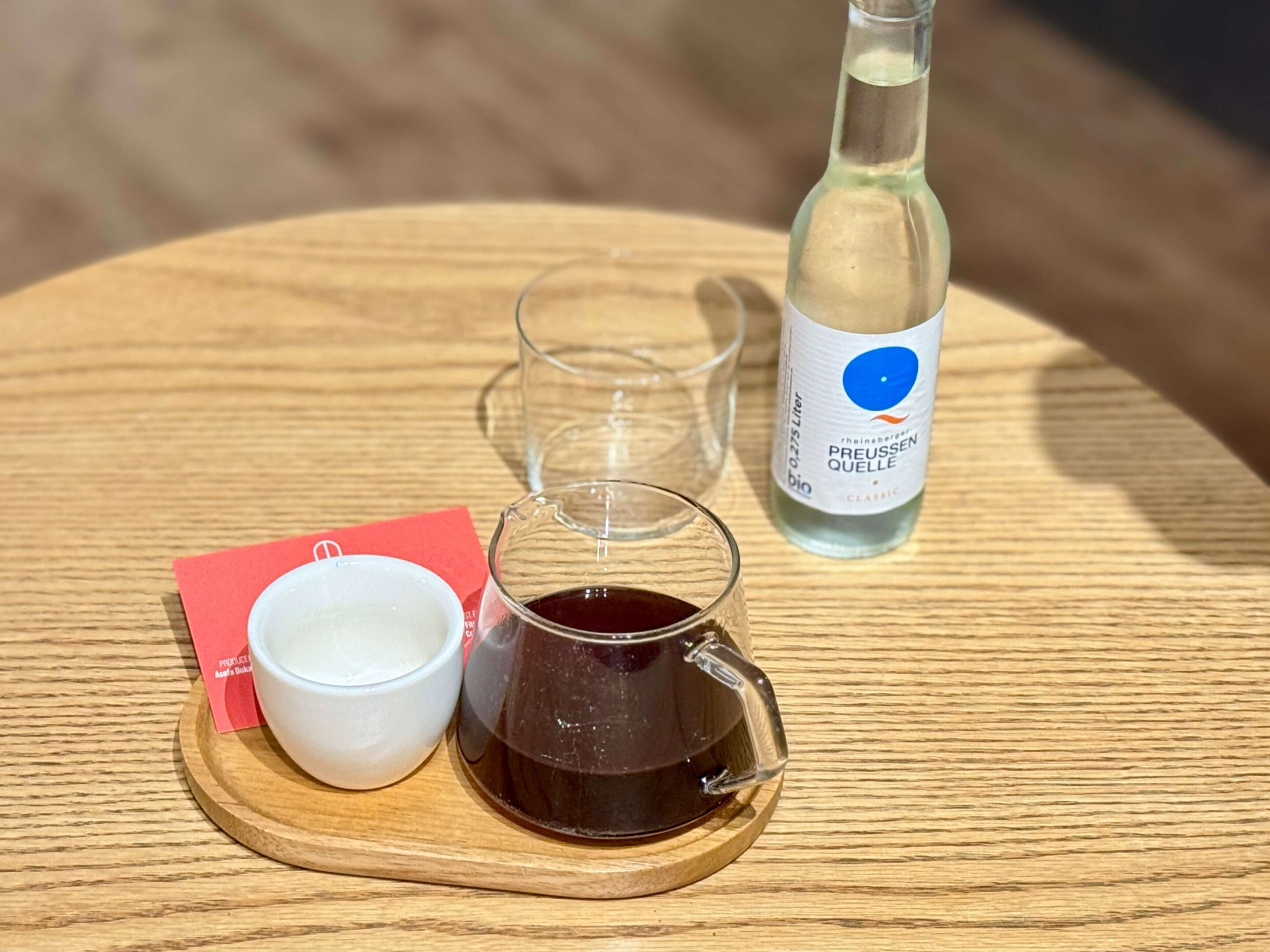
The other day, Kieran and I went to a really great specialty coffee shop in Barcelona, one that even won a prestigious award recently and is widely hailed as one of the best in town. And I do believe that it is. But it did one thing that didn’t really work for us: table service.
This element of hospitality that is quintessential to any good restaurant experience has, in recent years, increasingly been adopted into specialty coffee shops. The problem is, it doesn’t always have the desired effect.
After Kieran and I entered the café, we approached the counter to place our order. The host directed us to some empty bar stools and informed us that we could order with the waitress. Unfortunately, the waitress seemed to be more interested in chatting to her colleagues than giving us a menu. When the menu eventually did arrive, it turned out to be out of date.
The total time we sat around waiting for someone to attend to us exceeded ten minutes, which in such a small café is simply unacceptable, especially since we could have saved this time by ordering at the counter.
In the end, all we wanted was a delicious cup of coffee but instead, we ended up sitting around waiting for a service that didn’t meet out expectations and this ultimately tainted our experience. So, the question is, does table service in a specialty coffee shop really make the experience better or does it just add unnecessary complexity?
One of the very first subjects I ever wrote about for this blog concerned my tour around Vienna’s traditional cafés, iconic venues that have hosted great thinkers, revolutionaries, politicians and thousands of other people for centuries. There, the service is more traditional, even old fashioned some might say. These cafés have changed little over the decades and still exude a certain air of elegance with formally dressed waiters, white table cloths, elaborate cakes and beautiful china.
As coffee evolved into a fast moving consumer good, cafés adjusted by focusing more on speed and efficiency rather creating a space where people should linger all day and night, although Starbucks technically offered a bit of both since a large part of its business is take away. Equally, many specialty coffee shops became unofficial co-working spaces where legions of laptop-armed digital nomads spend hours while sipping on one cappuccino, often to the detriment of the cafés owners.
Offering table service in fast-paced coffee shop environments would feel a bit out of place although I have also experienced this from time to time in larger venues that also have an extended food menu. However, following the turmoil that was heaped on the hospitality industry by covid, inflation, staff shortages and a generational shift amongst workers, many café owners have had to recalibrate their offerings and introduced laptop bans to signal that they want conversations instead of typing.
One way to increase margins has been the shift towards more exclusive coffee menus with a selection of frozen microlots, signature drinks and elevated pastries. Yet, even in such environments table service isn’t always the best option. So why do an increasing amount of coffee shops insist on doing it anyway?
When your goal is to have your customers linger and order more expensive items from your menu, it can seem logical that having table service would also automatically translate into a better experience. Some might argue that offering only counter service to customers who are goin €20 for a freshly brewed Geisha would feel jarring.
I personally don’t believe this to be true and I’ve found that table service can easily worsen the experience if it doesn’t live up to the expectations. The point of table service, in my humble opinion, is to create a more relaxed restaurant vibe, potentially inviting customers to order additional items from the food menu or to provide professional advice on which microlot to pick for a pour over. It is also meant to reduce crowing at the counter and counter the impression that a venue is just a glorified Starbucks.
However, for this to work, a couple of important requirements have to be met. First, staff has to be properly trained. Being a waiter is a very different job from being a barista. It requires constant vigilance and eye contact with the customers. It demands that one is able to prioritize which task has to be done first to facilitate smooth service.
Second, one has to be knowledgeable about the products on offer and provide the correct advice. If a waiter has to constantly go over their notes or provides one with an incorrect menu, this already diminishes the added value.
Thus, the question any café owner should ask themselves is, will table service really add the extra level of quality that you want to offer or will it just make things take longer, costlier and ultimately make people less satisfied?
As I mentioned already earlier, I have often encountered table service in larger cafés, for example in London, where there is usually also an extensive food menu. These venues typically employ a variety of staff with different responsibilities, including baristas who only prepare pour overs, hosts who take guests to their tables and keep things tidy and chefs who prepare the food.
In Barcelona, I recently visited another café where the host who stood behind the counter also doubled as a barista and a waitress. Although the café wasn’t very busy at this time, this already showcased why asking staff to wear multiple hats isn’t always good practice. The service felt hectic and the coffees were not well made. It would have been easier and better if we had just placed our order at the counter instead.
Alternatively, table service works when one is given the menu as one enters and can immediately ponder the options while settling into one’s seat. This saves time and offers a much more efficient way to keep your customer busy. The problem I often see is that waiters spend too much time chatting with their colleagues or even looking at their phones instead of reading the room.
While every workplace should foster a positive and inclusive work atmosphere, I find that too often service staff is not focussed enough on doing what they’re hired to do. The same argument applies to hosts or waiters who do not create a welcoming space by being friendly and attentive. I know many business owners are really struggling to find the right employees but without proper training and without setting certain standards, hiring inexperienced staff can quickly backfire.
When we visit specialty coffee shops, we often want to strike up conversations with the very people we’re being directed away from. I am fully conscious that baristas are the ones who need to be the most focused and concentrated, and that keeping them engaged in chit chats can be extremely distracting and disruptive.
At the same time, they are the ones who are usually the most knowledgeable about the drink we just ordered and can give tips on preparation and equipment. By the same token, I don’t believe that baristas should be hidden away in a glass cage somewhere either. One way that cafés have created greater visibility is by using espresso machines like the Mavam or Modbar, which are largely hidden below the counter. Brew bars with stools before them also help to create visibility and often allow for more casual conversations between baristas and customers. This also fosters loyalty.
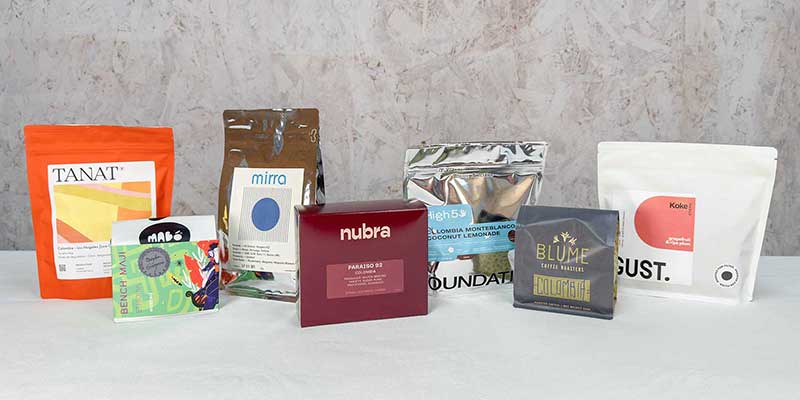
Want to get access to the best roasters? Join our critically-acclaimed coffee subscription and get a fresh selection sent to your door every month.
The fact is that many cafés still make a large portion of their turnovers from selling take away coffee, unless they specifically do not offer this like Substance Café in Paris. Thus, I personally think the host’s role is much more important than offering table service in a small café. A well-trained behind-the-counter host can share valuable advice on which coffees one should choose and they can also manage the crowds while swiftly inputting orders and directing customers towards certain waiting areas.
Café owners or managers should also take a more proactive role in making sure that the café is always tidy and dirty dishes are not cluttering counters or tables. I recently visited another café in Barcelona where there is no table service. Yet despite having two people behind the counter, there were a lot of dirty cups on full display. Every aspect of a space matters, from how clean it looks to how well a customer is looked after.
As someone who has visited more than 1000 cafés in the last decade, I can safely say, I’ve seen a lot. What has often struck me is how some café owners are just overcomplicating things and making unnecessary mistakes that can often render the experience significantly worse than it should have been.
What customers really want is to feel welcome, enjoy delicious coffee and a walk away feeling richer for the experience. Of course, every café is unique, has its own challenges and needs to create an experience that works in its circumstances. However, simplicity will always win the day.
This is because customers are already used to a certain way of working. They’re happy to place their orders at the counter, to receive their freshly brewed microlot at their tables and understand that sometimes, putting dirty dishes back on the counter or in a collection tray is normal. What they don’t want is to be made to wait unnecessarily long, receive confusing information from waiters and then feel like their €10 coffee wasn’t worth it.
Written by Alex Kitain, founder of The Coffeevine
Interested in taking your coffee journey to the next level? Be sure to subscribe to our coffee subscription!
You can find our full range of boxes in our shop ➡️
Now it’s over to you:
What do you think of table service in cafés? Is this a worthy addition that more coffee shops should introduce or is it not worth the hassle?
For this upcoming Coffeevine edition in May 2026, we’re going to team up with six super talented roasters from around the world.
To mark the exquisite April 2026 edition featuring two former World Barista Champions, we interviewed Jooyeon Jeon and Raúl Rodas just for you
Discover a World Class selection of incredible coffees from our fabulous April roasters. Brew like a champion with this brew guide.
Are we reaching peak cringe? Are Coffee Raves a hit or a fad? Here’s an honest account of attending one such event recently.
Subscribe to our newsletter for new box announcements, articles and special offers. No spam. Promise!
© 2026 All rights reserved The Coffeevine.